

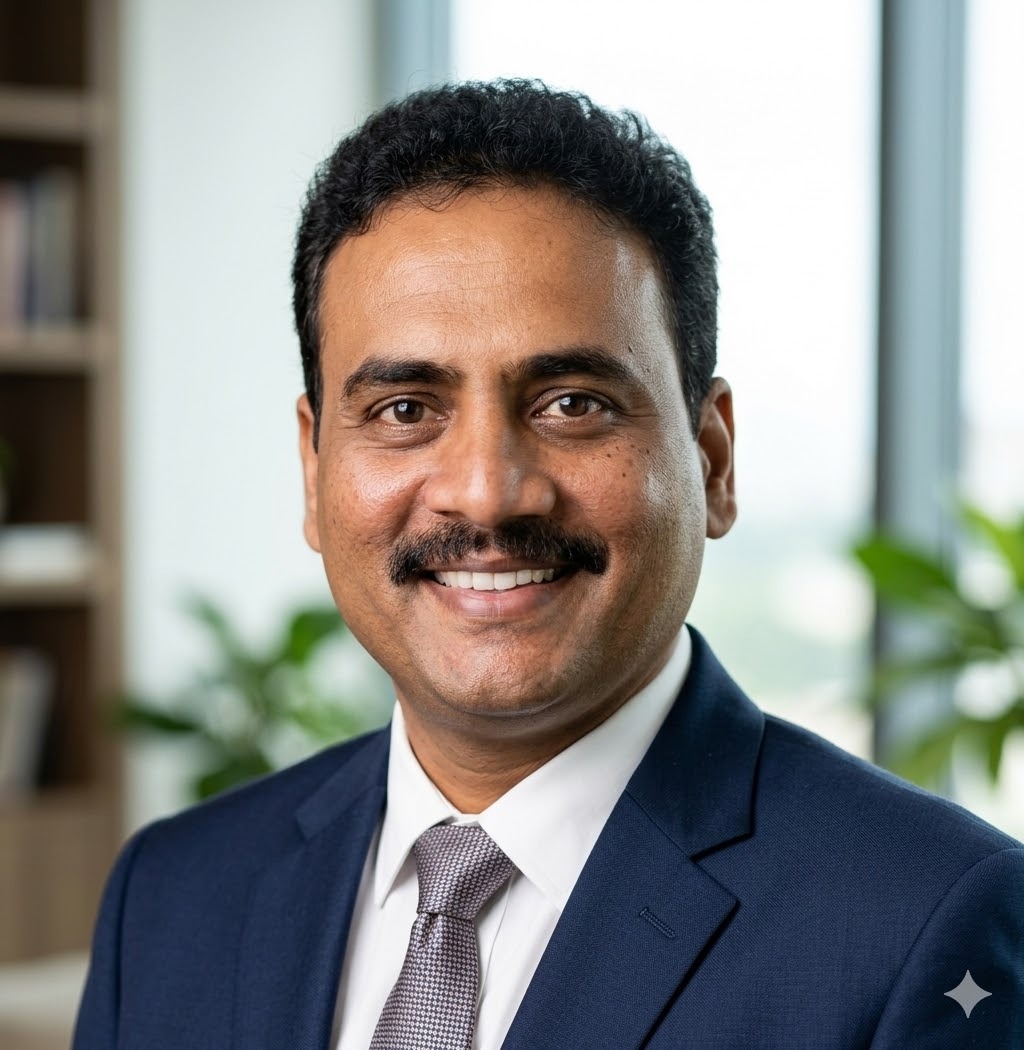
Sesha Gonaboyina
AI at the Edge of Consequence: Machine Learning in Mission-Critical Telecommunications Networks
Abstract:
Modern telecommunications networks generate billions of operational events daily, making them one of the most data-intensive and analytically demanding environments in existence. Yet the business intelligence and data analytics challenges inside live network infrastructure remain largely invisible to the broader AI and data community.
This keynote bridges that gap. Drawing on production deployments spanning carrier aggregation optimization, real-time anomaly detection, edge-to-cloud ML pipelines, and IoT device validation at national scale, we examine what it takes to move machine learning from research prototype to trusted operational system inside infrastructure serving hundreds of millions of people in real time.
Key themes include building end-to-end analytics pipelines on cloud-native infrastructure using Snowflake and streaming telemetry; applying statistical anomaly detection models that adapt to dynamic baselines rather than static thresholds; designing ML systems that degrade gracefully under adverse conditions; and translating raw network data into actionable operational intelligence during high-stakes events including large-scale public gatherings and disaster response scenarios.
The session offers practitioners a practitioner-level view of BI and ML on a national scale, where the cost of a wrong prediction is measured not in revenue but in connectivity for first responders during emergencies.
Profile:
Sesha Kiran Gonaboyina is a seasoned telecommunications and applied data science leader with nearly three decades of experience across the full lifecycle of wireless network engineering, from RF design during the early days of mobile through to systems architecture for 5G Advanced and IoT networks serving hundreds of millions of people today.
As a Senior IEEE Member and active technology community leader, he drives the intersection of telecommunications infrastructure and AI-driven operational intelligence. He builds cloud-native analytics platforms that convert raw network telemetry into real-time insights, develops ML systems for carrier aggregation optimization, and engineers network operations for high-stakes deployments including the Super Bowl, Formula 1 Racing, and disaster response during hurricanes and wildfires. His filed U.S. patent on carrier aggregation optimization (USPTO App. No. 18/607,417) reflects his commitment to advancing the state of the art in network intelligence.
He serves on Technical Program Committees for international conferences, acts as an independent judge for the Webby Awards, Globee Excellence and Cybersecurity Awards Business Intelligence Group AI Excellence Awards, and CODiE Awards (SIIA), and contributes to the research community through over 100 peer reviews across AI, machine learning, big data, 5G, and cloud-native systems,and serves as an Essay Reviewer for the Washington State Opportunity Scholarship, evaluating STEM scholarship applicants.
His publications span peer-reviewed journals and international conference proceedings, including work in the International Journal of Computer Applications (DOI: 10.5120/ijca2026926364), IEEE conferences, and AIP Conference Proceedings (Scopus and Web of Science indexed) at Major International Conferences.
He is a Fellow of the Scholars Academic and Scientific Society and SCRS Fellow Candidate, with regular contributions to global conferences on AI-powered telecommunications systems and network intelligence.